When a factory has many products, buyers need a clear first choice
An industrial supplier may serve several processes and materials. A buyer arriving with a specific production problem should not have to know the factory’s internal catalog structure before finding a relevant product.
The useful first question is usually practical: what material or process are you working with, and what are you trying to solve? A website can use those answers to make the next page and next step easier to find.
Start with product families buyers can recognize
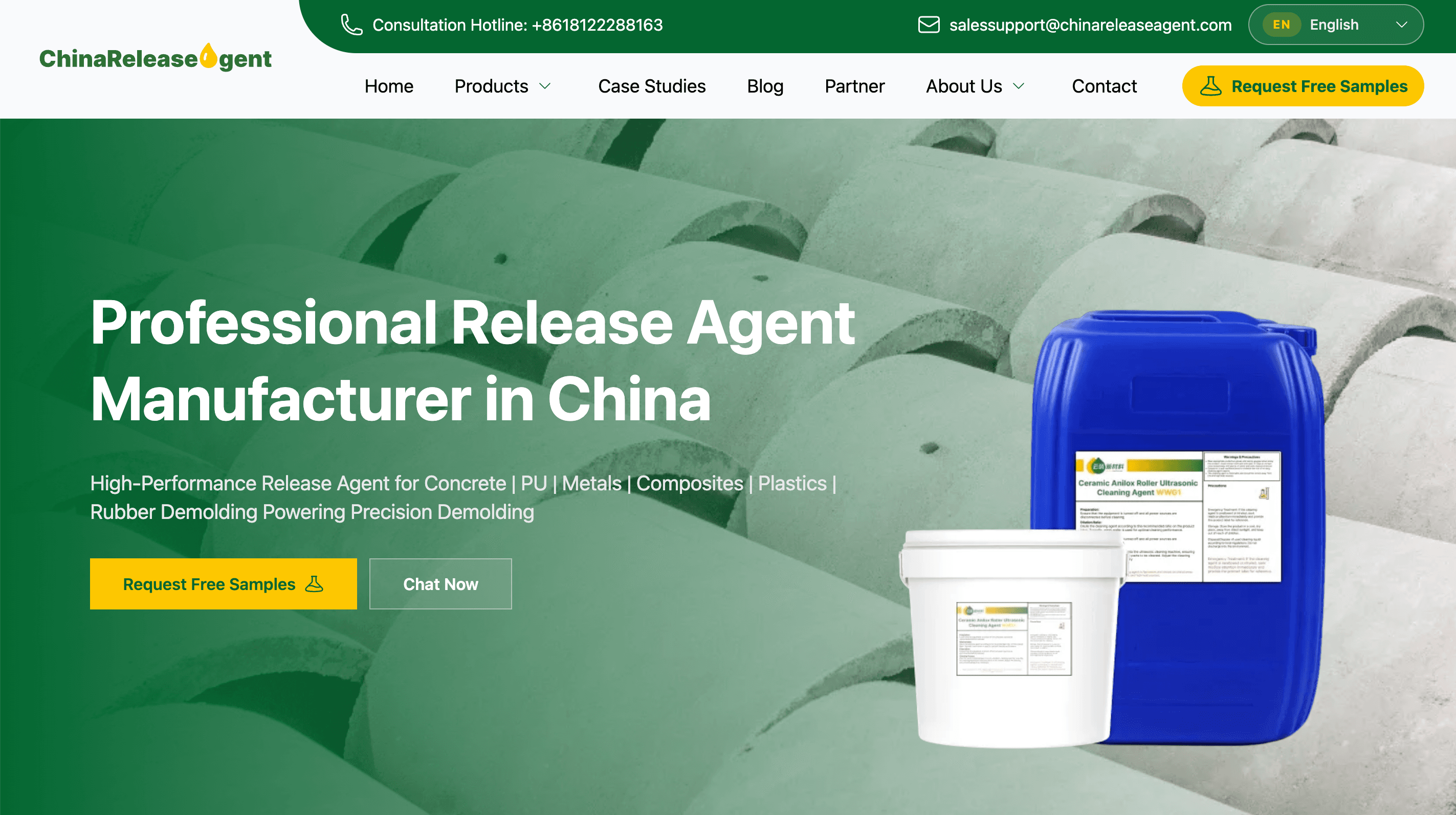
China Release Agent’s public website separates its range into concrete, PU, composite, metal casting, rubber, and plastic release agents. That gives a buyer a recognizable starting point based on the material or process, before asking them to compare individual products.
This is a useful structural choice when one factory serves different production lines. The category names should still match the terms customers use, and each category should lead to specific products and practical information rather than stopping at a label.
A single category page provides a closer example: the public Concrete Release Agent page combines application context, product information, technical details, and common questions. The aim is to help a buyer judge what to check next, not to imply that every product suits every process.
A useful product page connects the application to an inquiry
The buyer path can be summarized in four steps: identify the application, open the relevant product family, review the information needed to assess fit, and send the details required for a useful reply.
CASE BREAKDOWN · BUYER PATH
From application to an informed inquiry
- 01ApplicationConcrete / PU
- 02Product familyChoose by process
- 03Fit informationSpecs + conditions
- 04InquiryMaterial + process
Explain the information that affects product fit
A product name by itself rarely answers whether a release agent is suitable. The page should make the intended application and available technical information easy to locate. Buyers can then compare options against their own material, process, and operating conditions, and ask about anything the public page cannot confirm.
On the customer’s homepage, buyers who are unsure are asked to share details such as mold material, process conditions, and the defect or release issue they are seeing. These prompts help turn a general “Which product should I use?” message into a more answerable technical inquiry.
What other factories can take from this example
You do not need to copy another manufacturer’s menu. Start with one product line and check whether a first-time buyer can answer these questions without contacting sales just to find the basics:
- Which material, process, or application should I choose first?
- Which product options are actually available for that use?
- What specifications, documents, or conditions help me compare them?
- If I am unsure, what information should I send for the factory to assess fit?
What this case does and does not show
This breakdown describes information and navigation visible on the customer’s public website. It shows one way to make a multi-line industrial catalog easier to browse; it does not prove that a single page or menu change caused a particular ranking, traffic increase, or inquiry result.
The right structure depends on each factory’s products, buyer language, technical evidence, and sales process. Start with facts the product and sales teams can confirm, then improve the pages buyers need most. You can also review the China Release Agent case study and our website design and development service for related examples and project scope.
Common questions
Should product categories follow our factory’s internal departments? Only when those names also help buyers choose. If customers search or ask by material, application, process, or problem, use those familiar entry points and connect them to the internal product range.
Do all technical specifications need to be public? No. Publish accurate information that your team has approved and is comfortable sharing. For details that depend on a buyer’s conditions, state what needs to be confirmed and ask for those details through the inquiry path.
Does a clearer product structure guarantee more inquiries? No. It can make relevant information and contact steps easier to find, but inquiries also depend on buyer demand, visibility, product fit, trust, and follow-up. Measure those stages separately.